 ← creativemindsfrisco.com
Our Research Series digs into the science of early childhood — but research papers aren't bedtime reading. Here is each of the six papers retold in plain English, and how the ideas connect into one philosophy. Follow the thread from top to bottom, or jump to the full paper whenever you want the complete evidence.
The journey
01Why the love of learning comes first 02Beyond the cookie-cutter classroom 03The hundred-year experiment called Waldorf 04Art is how young children think 05What music really does for a growing mind 06Raising kind, responsible little citizens
Chapter 01The Foundation
Every parent has seen it: a toddler who asks "why?" forty times a day, who empties the kitchen cabinet just to see what's inside, who wants the same story again and again until she owns every word. Children arrive in the world wired to learn, and they love doing it. The real question researchers have spent decades studying isn't how to create that love — it's how to avoid extinguishing it.
The science of motivation offers a surprisingly clear answer. Children (like adults) thrive on three feelings: that they have some say in what they do, that they're getting good at something, and that they're cared for while they do it. When early education protects those three feelings, curiosity does the heavy lifting. Brain research adds a lovely detail: a curious mind actually remembers better. When children are genuinely interested, learning sticks — not just the thing they were curious about, but whatever else comes along for the ride.
The disposition to love learning is built — or eroded — in the earliest years of life.
There's a flip side, and it matters. When young children are pushed through drills, worksheets, and rewards-for-right-answers too early, studies find the gains are real but short-lived — while the cost can be lasting: children learn that learning is a chore someone else makes you do. Long-term studies that followed children for years found that those from pressure-cooker early classrooms often lost their early advantage, and some showed less enthusiasm for school later, while children from play-rich, choice-rich classrooms kept climbing.
The practical takeaway for parents touring preschools: look for children who are absorbed, not just busy. Ask how much of the day children choose their own work. Watch whether teachers feed questions back to children ("What do you think would happen?") instead of rushing to answers. A classroom that protects wonder is doing the most academic thing possible — building a learner who will still love learning at 8, 18, and 48.
So if love of learning is the goal, what kind of classroom protects it? That's the second idea — and it starts with what we don't use: a boxed curriculum.↓
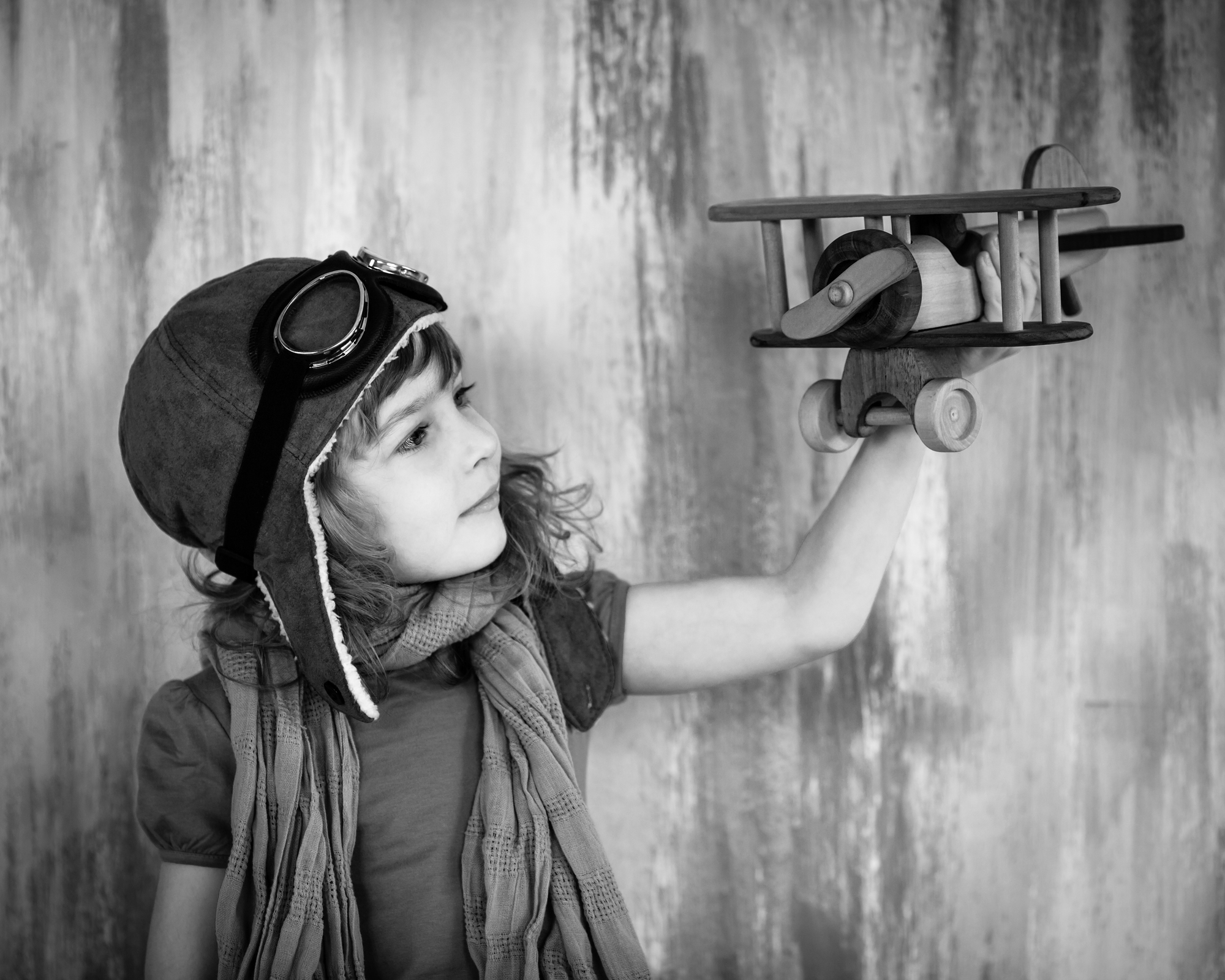
Chapter 02The Method
Many childcare chains teach from a box: a scripted curriculum written far away, delivered the same week to thousands of classrooms, regardless of which children are actually sitting in them. It's designed so that any adult can administer it. Our second article asks what the research says about the alternative — curriculum built by teachers, on site, around the actual children in the room — and the evidence is one of the best-kept secrets in early education.
Long-term studies that tracked children from different kinds of preschools into elementary school and beyond keep finding the same pattern: children from heavily scripted, drill-style programs start school looking slightly ahead — and then the advantage evaporates. By the upper elementary grades, children from play-based, child-directed programs match or pass them academically, and tend to fare better on things like independence and attitude toward school.
Play with a purpose — researchers call it "guided play" — equals or beats direct instruction, while keeping the joy intact.
The most useful finding for parents is about the middle path. Researchers compared free play, direct instruction, and something in between called guided play: the adult sets up an inviting goal, then lets the child steer. Across dozens of studies, guided play matched or beat direct teaching on academic skills — letters, numbers, shapes — while preserving everything that makes childhood childhood. It turns out children learn most from the questions they're chasing, not the questions chasing them.
There's also a quieter benefit: what this approach does for teachers. A teacher who designs her own curriculum is watching your child closely — she has to, because your child is the curriculum's source material. That's why we've never bought a boxed program: a classroom tuned to the children in it can meet each child at their own level, stretch the fast mover, and give the late bloomer room to bloom. (It's also the engine behind Chapter 1's love of learning — choice is the fuel.)
Child-led learning isn't a new fashion. A century ago, one school movement staked everything on it — and the results are still being studied today.↓
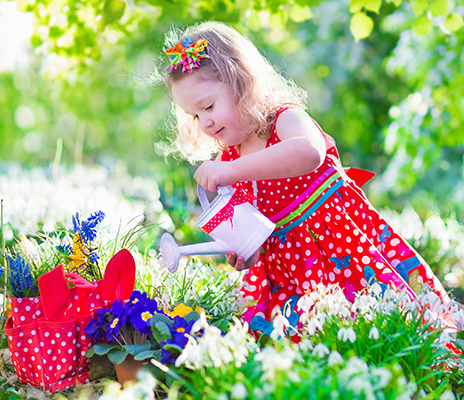
Chapter 03The Tradition
In 1919, in a school built for factory workers' children in Stuttgart, Germany, Rudolf Steiner launched what became one of the largest independent school movements on earth — more than a thousand Waldorf schools and nearly two thousand kindergartens across some seventy countries. Waldorf early childhood looks unmistakable: long stretches of imaginative play with simple natural materials, daily painting and singing, storytelling instead of screens, the same warm teacher year after year — and no formal reading lessons until around age seven.
That last part raises eyebrows, so our third article walks through what a century of research actually shows. On the reading question, the evidence is genuinely comforting: large international studies find that children who start reading later catch up fully — typically by around age eleven — especially when their early years were rich in stories, songs, and conversation, which build the oral language that reading comprehension later stands on. Meanwhile the things Waldorf holds sacred turn out to be among the best-supported ideas in developmental science: a warm, steady teacher relationship in kindergarten predicts a child's school success years later, and adventurous, child-directed play — climbing, building, taking small brave risks — is linked to resilience, creativity, and confidence, not to more injuries.
"Head, heart, and hands" reads less like a slogan and more like a fair summary of how young children actually flourish.
Comparative studies of Waldorf students show a consistent arc: a slower academic start, then parity or better by middle school, with graduates who especially value their lifelong appetite for learning — the very thing Chapter 1 says matters most. The research also counsels honesty: these studies can't fully separate the school's effect from the families who choose it, and not every Waldorf claim is proven. But the heart of it — warmth, rhythm, imagination, unhurried childhood — sits squarely on the evidence. It's the spirit that has always animated Creative Minds.
If you spend a morning in a Waldorf-inspired classroom, one thing is everywhere: art. Not as decoration — as the actual way children do their thinking.↓

Chapter 04The Medium
Adults tend to file art under "enrichment" — a pleasant break between the real work of letters and numbers. Our fourth article argues, with the research behind it, that for three-to-seven-year-olds this is exactly backwards. Children draw before they write, sing before they read, and pretend before they reason abstractly. When a four-year-old draws her family, she is practicing symbols, hand control, planning, and emotional storytelling all at once. Art isn't a rest from thinking. At this age, art is thinking.
Some of the strongest evidence involves the hands. Drawing, cutting, painting, beading, kneading — the fine motor work of a crafty classroom — turns out to be a startlingly good predictor of later school achievement, in both reading and math. The fingers, it seems, teach the brain. Drama earns its own gold star in the research: acting out stories reliably strengthens language, narrative understanding, and empathy — children who step into a character's shoes get better at understanding real people too.
The fingers teach the brain: early handwork predicts later achievement in reading and math.
Our article is honest about the limits — the famous claims that art automatically raises test scores don't all survive scrutiny, and we say so. But the deepest case for art needs no test-score alibi: art gives small children a language for feelings bigger than their vocabulary. A child who can paint the storm doesn't have to be the storm. That emotional outlet, researchers find, supports the self-regulation that kindergarten teachers prize above all. And the habits serious art-making builds — noticing closely, sticking with hard things, imagining what isn't there yet — are the same habits that power the child-led learning of Chapter 2.
Of all the arts, one has the deepest research trail of all — the one woven through a preschool day in clean-up songs and clapping games.↓
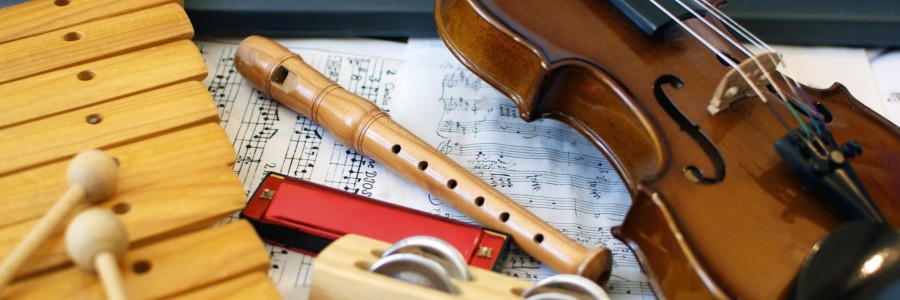
Chapter 05The Deepest Groove
A circle of four-year-olds shaking egg shakers to a beat looks like simple fun. Our fifth article gathers the developmental and brain research showing how much is happening inside that circle. The headline: singing and rhythm are quietly building the foundations of reading. To learn to read, a child must first hear that words are made of smaller sounds — and songs, rhymes, and clapping games are exactly the ear-training that skill grows from. Children who keep a steady beat well tend to become stronger readers; moving to music tunes the same auditory circuits that reading will later borrow.
Music also trains the body and the will. Marching, swaying, and drumming knit together hearing and movement. Songs with rules — freeze dances, fast-then-slow games, waiting for your verse — are self-regulation workouts disguised as delight: the child practices stopping, starting, waiting, and controlling impulses because the game makes her want to. And music is social glue. Studies found that children who make music together — even one shared song — afterward help and cooperate with each other more. Humans bond when they sing in the same rhythm; preschoolers most of all.
Songs with rules are self-regulation workouts disguised as delight.
Here our series keeps its honesty streak: the famous "Mozart effect" — the idea that just listening to classical music makes children smarter — didn't survive replication, and we say so plainly. What holds up is active music-making, woven daily into real routines. That's why music at Creative Minds isn't a Friday special; it's the fabric of the day — the artistic thread of Chapter 4 set to a beat, serving the language, focus, and togetherness every other chapter cares about.
Minds, hands, ears — and finally, hearts. Because the point of all of it is not just a clever child. It's a good one.↓
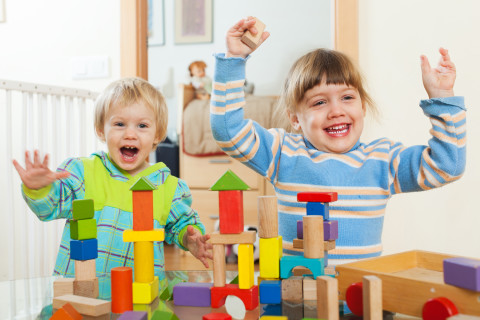
Chapter 06The Purpose
Here is the most hopeful finding in our whole series: kindness comes factory-installed. In studies of toddlers, children as young as fourteen months — barely walking — will spontaneously toddle across a room to help an adult reach a dropped object, unasked and unrewarded. Children arrive predisposed toward helping, sharing, and fairness. The job of early education isn't to install goodness. It's to give it daily exercise so it grows strong.
What does that exercise look like? The research points to surprisingly ordinary things. Real responsibility, first: children who grow up doing genuine tasks — watering plants, setting tables, helping a younger child — show benefits that long-term studies trace all the way into adulthood. (This is why our classrooms are full of real jobs, not pretend ones.) Community, second: children behave like caring members of a community when the classroom actually is one — when they feel they belong, are known, and are needed. And practice, third: large reviews covering hundreds of programs found that when schools deliberately teach social and emotional skills, children don't just behave better — their academics improve too. Heart and head, it turns out, are on the same team.
Kindness comes factory-installed. Our job is to give it daily exercise.
One more finding parents already suspect: character is caught more than taught. Young children learn morality less from lectures than from watching how the adults around them treat people — which is why the warm teachers of Chapter 3 matter twice over. And so the thread comes full circle: a child whose curiosity is protected (Chapter 1), who steers her own learning (Chapter 2), who thinks with her hands (Chapter 4) and sings with her friends (Chapter 5), is also quietly becoming the thing that matters most: a person who is good company for the world.
Twenty deeper dives
These six essays draw on a larger body of work: our research library reviews twenty early-childhood methodologies — from Montessori and Reggio Emilia to ancient Greece and China — each tested against the peer-reviewed evidence. There is also a plain-English guide to all twenty.